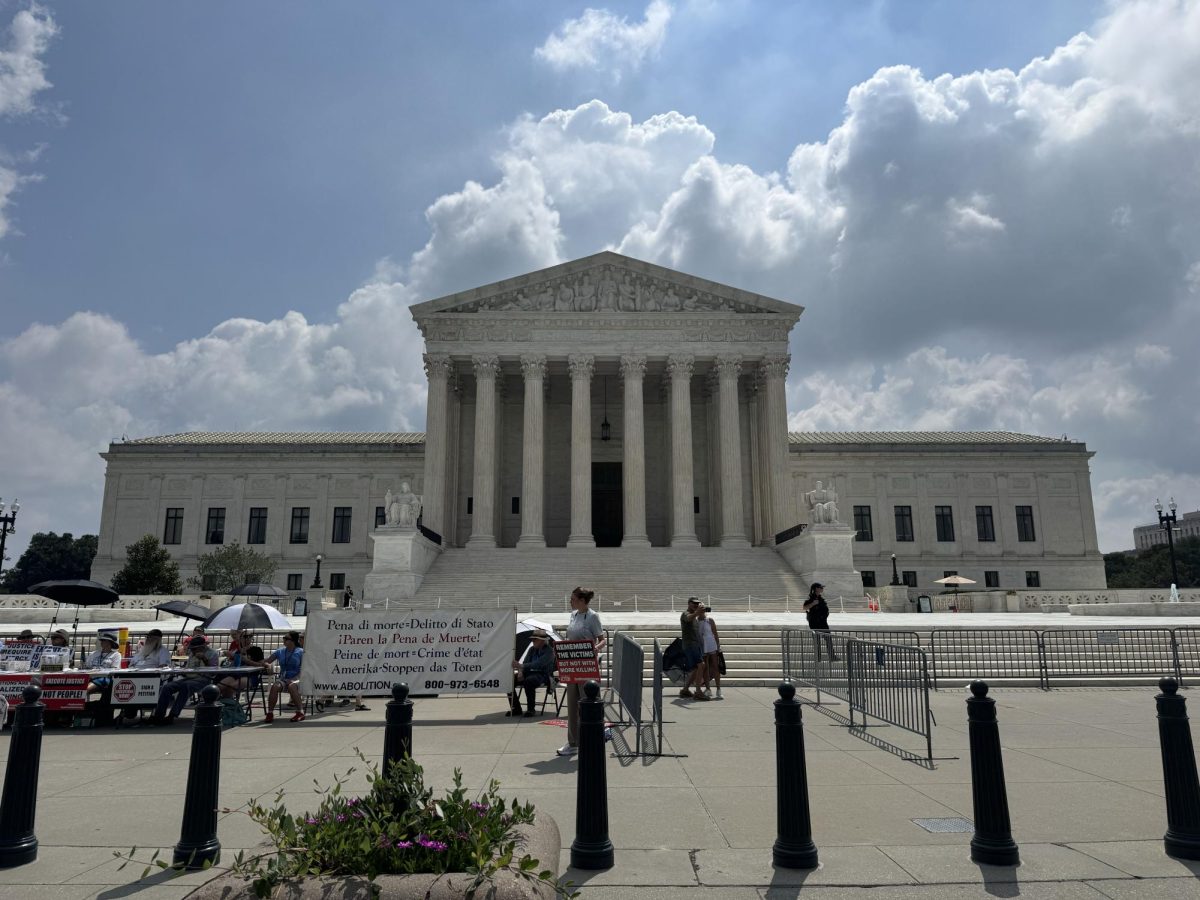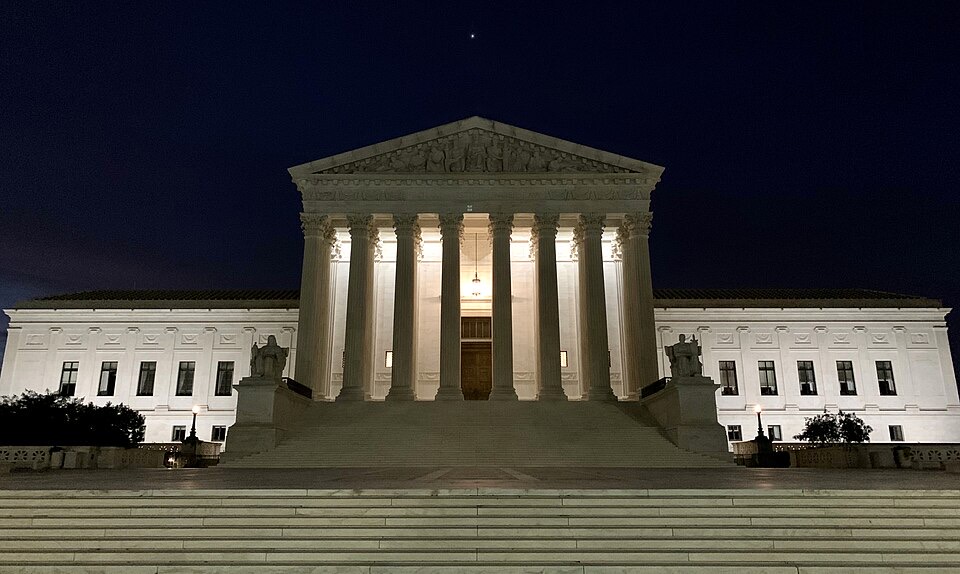
WASHINGTON — During Monday’s arguments, U.S. Supreme Court justices expressed skepticism about the government’s authority to broadly disarm “habitual drug users” even when no specific danger is shown.
The dispute highlights the ongoing tension between federal gun laws and state marijuana policies and marks the latest test of the Court’s Second Amendment framework.
At issue is a federal law, 18 U.S.C. § 922(g)(3), which prohibits any person who is an unlawful user or addicted to a controlled substance from possessing a firearm. While states such as Oklahoma allow licensed medical marijuana users to own firearms under state law, marijuana remains illegal under federal law. Because federal law supersedes conflicting state measures, individuals who use marijuana, even in compliance with state programs, may face federal firearm charges.
The case stems from a search of Ali Danial Hemani’s Texas home, where FBI agents found marijuana, cocaine and a Glock 9mm pistol in his bedroom. Hemani admitted using marijuana roughly every other day. He was charged under the federal law as an unlawful user of a controlled substance in possession of a firearm.
A federal district court dismissed the charges, and the U.S. Court of Appeals for the Fifth Circuit affirmed in an unsigned opinion, concluding that the government failed to demonstrate the statute was consistent with the nation’s historical tradition of firearm regulation. The government then petitioned the Supreme Court, seeking clarity on how the Court’s recent Second Amendment decisions apply to firearm restrictions tied to drug use.
This issue has also arisen in Oklahoma jurisdictions. In 2022, during a traffic stop in Lawton, police found marijuana and a firearm in Jared Micheal Harrison’s vehicle. The U.S. Court of Appeals for the Tenth Circuit reversed his federal conviction, Section 922(g)(3), holding it unconstitutional as applied to Harrison. The court said the government had not shown a historical tradition of disarming individuals in circumstances like Harrison’s, where no evidence suggested intoxication while armed or other threatening behavior.
The Department of Justice later moved to dismiss Harrison’s indictment without prejudice, citing pending Supreme Court cases which would change the legal landscape. Ultimately, the U.S. District Court for the Western District of Oklahoma dismissed the indictment after appeal.
Terry Thompson, state director of operations for the Oklahoma Second Amendment rights group OK2A stated how taking away someone’s Second Amendment rights would be analogous to ripping away someone’s First Amendment rights due to the fact they used marijuana.
“The OK2A community has been dealing with this kind of thing for decades,” Thompson said. “There’s the standard argument of public safety. Anybody having a gun under any circumstances could be construed by some people as a danger to public safety, as is somebody driving a car.”
Hemani’s case comes amid a series of Supreme Court decisions reshaping Second Amendment analysis. In New York State Rifle & Pistol Association Inc. v Bruen, the Court held that when the Second Amendment’s plain text covers an individual’s conduct, the government must show that any regulation is consistent with the nation’s historical tradition of firearm regulation. Courts may no longer rely on interest-balancing tests that weigh public safety against individual rights.
In the government’s petition to the Court, their argument laid primarily within the historical tradition of the Bruen framework, relying on the use of surety laws, civil-commitment statutes and vagrancy laws.
Surety laws in the founding-era required individuals accused of threatening behavior to post a bond if they posed a danger. In Rahimi, these laws were cited to show that legislatures historically used temporary measures for public safety. The government argues that historical regulations targeted habitual intoxication and notes that courts once defined a “drunkard” as someone habitually intoxicated, drawing a parallel to unlawful drug users. Civil-commitment and vagrancy laws, it adds, show long-standing legislative authority to restrain or disarm groups considered dangerous.
During oral arguments, several justices appeared skeptical of the government’s comparison between founding-era “habitual drunkards” and modern marijuana users.
In defending the historical analogy, the government pointed to laws addressing habitual intoxication. But Justice Neil Gorsuch questioned how closely those comparisons fit.
“The American Temperance Society back in the day said eight shots of whiskey a day only made you an occasional drunkard,” Gorsuch said. “We have to remember the founding era. If you want to invoke the founding era, to be a habitual drunkard, you had to do double that.”
The exchange underscored broader concerns about whether historical definitions of intoxication can be neatly applied to modern marijuana use.
Another area of confusion centered on the federal drug “schedules,” which classify substances based on their potential for abuse and accepted medical use under the Controlled Substances Act. Marijuana is currently listed as a Schedule I substance, the most restrictive category to justify federal law.
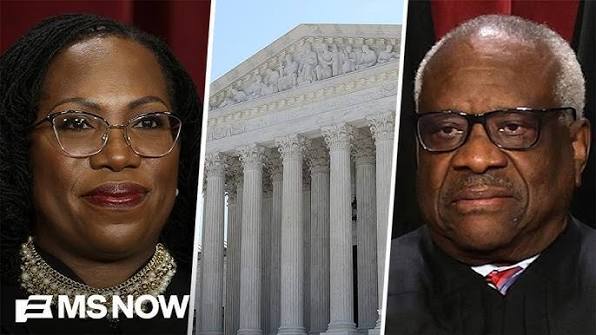
Justice Amy Coney Barrett noted that for lower-scheduled substances, the issue may be less about inherent dangerousness and more about the drug’s legal status. Justice Ketanji Brown Jackson also expressed skepticism about how far historical analogies could stretch to justify modern categorical bans.
Hemani’s legal team countered that the comparison fails under the Court’s more recent decision in United States v. Rahimi. In his Supreme Court briefing, Hemani argued that although the Court upheld Section 922(g)(8) in certain circumstances, those restrictions were tied to individualized judicial findings that a person posed a credible threat. By contrast, he said, Section 922(g)(3) disarms individuals solely based on their status as unlawful users, without any determination that they present a specific danger. He also contended that none of the historical laws cited by the government explicitly prohibited firearm possession or imposed a comparable burden on the right to keep and bear arms.
Erin E. Murphy, arguing on Hemani’s behalf, emphasized under questioning from Justice Brett Kavanaugh that the challenge focuses on what she described as an “unlawful user” blanket provision. She argued that the statute sweeps broadly to cover anyone engaged in habitual use of a controlled substance, regardless of whether there has been any individualized finding of dangerousness.
At the same time, she clarified that Hemani does not challenge restrictions tied specifically to addiction itself, but rather the categorical nature of the unlawful-user provision.
Gaylord News is a reporting project of the University of Oklahoma Gaylord College of Journalism and Mass Communication. For more stories by Gaylord News go to GaylordNews.net.